You finish a UWorld block, open the explanations, and find a mix of problems: a few true content gaps, a question you almost got right, a graph you rushed, and a correct answer that was mostly a guess. Then the real question arrives: should you redo the incorrects, make cards, reread a chapter, or keep moving so you can finish the QBank?
Here is the short answer: UWorld can be excellent practice and feedback, but it does not automatically create a personal retention system. It shows you what happened on a block; you still need a way to decide why it happened, what rule transfers, and when to test the repair again. That is the difference between completing a QBank and using it to guide your next study session.
Can you study for the MCAT with only UWorld?
UWorld can be a reasonable primary practice resource. It gives you a high volume of passage-based decisions, detailed feedback, and useful evidence about which concepts, reasoning habits, and pacing problems need attention.
Using UWorld as your only resource is riskier. It cannot replace targeted content repair when you do not understand a foundational idea, and it does not give you familiarity with the style and expectations of official AAMC questions and full-length exams. The AAMC describes its official products as including full-length exams, question packs, and answer explanations tied to MCAT skills. AAMC Official Prep
For most students, the more comprehensive approach is UWorld plus AAMC practice plus targeted review: use UWorld to expose and repair weak points, preserve enough official material to practice and review carefully, and turn recurring errors into recall tasks or process changes. A high UWorld completion percentage is a useful progress marker, but it is not the same thing as MCAT readiness. What matters is whether you can apply repaired lessons on fresh questions, under realistic timing, and across sections.
Is UWorld enough for the MCAT?
UWorld can be a valuable part of MCAT preparation because it gives you repeated practice making decisions from passages, figures, and answer choices. Its explanations can help you identify a missing relationship, understand why an alternative was wrong, or see a reasoning step you skipped.
But no QBank can decide your study plan for you. It cannot automatically separate a true content gap from a missed qualifier, a timing problem, or a CARS answer that sounded reasonable but was not supported by the passage. It also cannot tell you which lesson you will still need to retrieve next week.
That does not mean you need to turn every question into a card or spreadsheet row. It means each important question needs a useful next action. Official AAMC practice materials similarly provide answer explanations and connect questions to tested skills; the explanation is feedback, not the complete review system. AAMC sample-question guide
What UWorld is great for, and what it does not organize
Use a QBank for practice, explanations, and honest feedback about where your current process breaks. It is especially useful for exposing:
- Concepts and relationships you cannot retrieve.
- Passage details, data, or graph conditions you overlooked.
- Reasoning steps that felt clear only after reading the explanation.
- Timing habits, such as getting stuck on calculations or rushing the final questions.
- Correct answers that came from lucky elimination instead of stable reasoning.
What it does not organize automatically is the personal layer: the cause of the miss, a short transferable rule, and the right next review date or practice task. If every missed question becomes a screenshot or a copied explanation, you have preserved the old problem without creating a loop that tests whether it is repaired.
For the detailed question-by-question method, see how to review MCAT practice questions. This post focuses on choosing the right action after that review.
The four UWorld question types to save
Do not sort a completed block into only correct and incorrect. Mark these four categories before you decide what to review:
| Question type | Why it matters | First next step |
|---|---|---|
| Wrong answer | A knowledge, reasoning, reading, or timing failure occurred. | Find the first meaningful error and write one repair. |
| Guessed-right answer | The score was correct, but the process was unreliable. | Review what would have made the answer repeatable. |
| Slow-right answer | You may know the material but not have an efficient approach. | Identify the bottleneck and test one pacing adjustment. |
| Uncertain-right answer | You changed without evidence or cannot explain the reasoning. | Capture the missing rule or evidence habit. |
Confident correct answers usually need only a short scan. Review the questions that were not truly secure, then protect time for fresh practice. This guide on reviewing correct MCAT questions shows how to make that distinction without extending every block into an all-day review session.
Redo incorrects, make cards, or reread content?
The right move depends on the earliest reason the question went wrong, not simply the topic name.
| What happened | Best next step | Why |
|---|---|---|
| You did not know a concept, equation, or pathway relationship | Do focused concept repair, then make a concise recall prompt. | You need to understand and retrieve the missing knowledge. |
| You knew the concept but could not produce it under pressure | Make a compact card and return to it after a delay. | The knowledge is present but unstable. |
| You misread the stem, ignored data, or made a logic leap | Add an error tag and use a targeted drill or process checkpoint. | More facts will not necessarily change the decision habit. |
| You recognize the old answer but cannot apply the rule elsewhere | Test the rule on fresh questions instead of resetting the QBank immediately. | Old-item familiarity can hide whether learning transferred. |
Redoing a question can be useful when it tests a recurring gap and enough time has passed that you can reason through it again. It is less useful when you remember the passage layout or answer choice but still cannot explain the transferable rule. In that case, a fresh question is a better test.
This is why a content gap and a careless mistake need different repair plans. “Study more” is not a diagnosis. Use LoopdMed’s Error Taxonomy to apply the same labels across blocks, then look for the labels that keep repeating.

Use one take-home rule for every important UWorld miss
After a priority question, write one sentence you could use on a new item. A good rule tells you what to notice or do next time. It does not summarize the entire rationale.
| Weak note | Better take-home rule |
|---|---|
| ”Review fluids." | "Before calculating, identify whether the question asks about pressure, flow, or resistance and match the units to the target." |
| "Read CARS carefully." | "For an inference question, reject an answer that adds a claim beyond the author’s position." |
| "Study enzyme inhibition." | "State what the data show about substrate and reaction rate before selecting an inhibition mechanism.” |
Keep the full question and explanation in UWorld or another permitted source. Your personal note needs only the source, error type, take-home rule, and next action. LoopdMed’s Missed Question Log keeps those pieces together without reproducing licensed QBank material.
A UWorld review example: one science gap and one CARS error
Imagine that Maya finishes a timed block with two questions worth saving. In a Chem/Phys passage, she cannot recall how cell potential relates to the sign of delta G. In CARS, she selects an answer that sounds reasonable but reaches beyond what the author actually supports.
The science miss is a content-and-retrieval problem. Maya reviews the narrow relationship, makes one recall prompt, and tests it in a fresh science set later that week. The CARS miss is not solved by a new fact card. Maya tags it as an evidence mismatch, identifies the passage support she ignored, and uses a checkpoint in the next passage: point to the author claim before committing.
Both questions were wrong, but they create different review items. That is the value of a personal system: it turns a block into a short queue of repairs instead of a general feeling that you need more content review.
When Maya sees the same science relationship missed twice, she gives it a short, focused content review before another fresh set. When the CARS tag repeats, she does not add more science cards; she reviews passage evidence and watches whether the checkpoint changes her next few decisions. Repeated tags should guide the next task, while a one-off miss is a reason to monitor rather than rebuild your plan.
The UWorld review workflow: practice block to review queue
Use this after a practice block or a full-length section:
- Mark priority questions. Save wrong, guessed-right, slow-right, and uncertain-right questions.
- Diagnose the miss. Choose the earliest useful cause: content, retrieval, stem reading, logic, timing, or CARS evidence.
- Write one rule. Capture the smallest lesson that could transfer to a new question.
- Route the task. Send a fact to a recall prompt, a reasoning error to a drill, a misread to a checkpoint, and a timing issue to a pacing behavior.
- Review patterns weekly. Look for repeated tags before adding broad new tasks to your schedule.
- Retest on fresh material. The repair is not complete because the explanation makes sense. It is complete when the next decision changes.
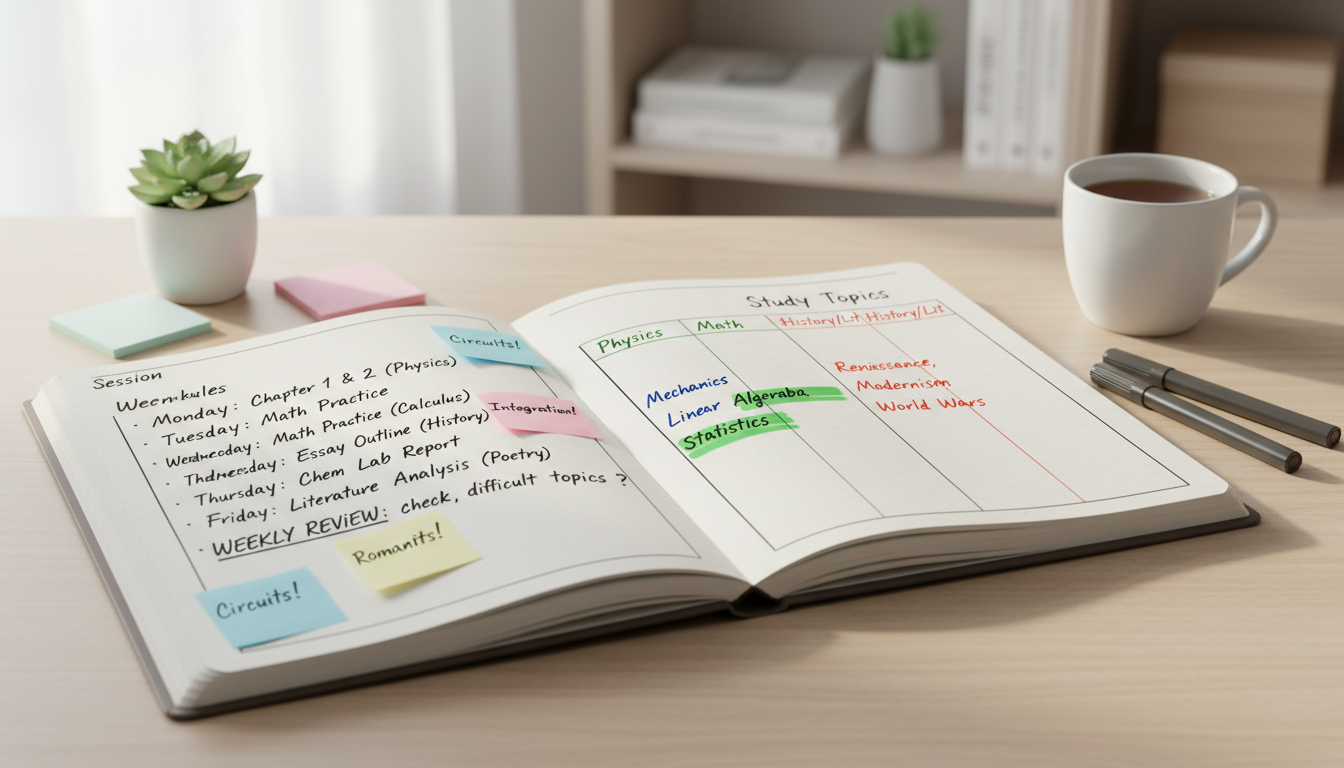
This is a practical LoopdMed workflow, not a fixed research protocol. The evidence-backed principle is that revisiting and retrieving useful lessons over time can support learning. A systematic review in health-professions education found benefits for retrieval practice and/or distributed practice in 43 of 63 included experiments, although the interventions varied. Retrieval and distributed-practice review
A separate review of test-enhanced learning found that many retention and transfer outcomes favored retrieval practice over studying alone. Test-enhanced learning review For MCAT prep, that supports returning to the right rule and testing it in a fresh context rather than only rereading an explanation.
When should you start AAMC material while using UWorld?
Do not wait for perfect UWorld completion to think about official material. Your timing depends on the test date, the official questions and full-lengths you still want to use, and whether you have enough space to review them carefully.
As AAMC material becomes more important, keep only the UWorld review tasks that are still targeted: a recurring content gap, an unstable relationship, or a process error that appears on fresh practice. Do not let a giant incorrects backlog crowd out the official practice you planned to complete.
If you have finished UWorld or are close to it, use the companion guide, what to do after finishing UWorld for the MCAT, to plan the transition. The goal is not to abandon the lessons UWorld revealed. It is to carry only the useful ones forward.
UWorld becomes more valuable when incorrects have a next step
UWorld can give you excellent questions and explanations. The score progress does not come from the QBank alone; it comes from what you do after a missed, guessed, slow, or uncertain question. Diagnose the cause, keep one rule, and test the repair on fresh material.